7 Clear Signs Your Winterization Worked (Without Waiting for Spring Surprises)
By Turfrain
You’ll know winterization was successful if your irrigation lines are dry, the shutoff and backflow aren’t icing up, your controller is truly off, and your lawn slipped into dormancy cleanly—no soggy spots, no fungal mats, no vole highways. Come spring, you should see quick green-up, fewer bare patches, and no cracked sprinkler parts.
Quick signs at a glance:
Sprinkler heads stay dry when a zone is briefly tested with air
No ice or hissing at the backflow or manifold
Controller set to Off/Rain mode and water supply valve closed
Lawn entered winter evenly, cut to 2.5–3 inches, no heavy thatch
No musty odor or matted patches after a thaw
What you’ll learn from this blog
Fast checks you can do today to confirm winterization worked
How to spot sprinkler blowout success vs. looming freeze damage
Lawn cues that your fall fertilizing and final mow were on point
Common red flags (and simple fixes) before they get expensive
What to watch through winter and how Turfrain can help
Start Here: The Two‑Minute Winterization Audit
Think of this like a quick walkaround before you pour a coffee. If these pass, you’re in good shape.
Shutoff sanity check: The irrigation water supply should be closed. Gently touch the valve and nearby pipe—should feel dry, quiet, and room temp (no cold “ghost” indicating water flow).
Controller status: Set to Off or Rain mode. If it’s on Wi‑Fi, ensure no rogue schedules will fire. Bonus points if you labeled zones for spring.
Backflow and manifold: No ice, no hissing, no damp soil. If you hear a faint whistle, a valve may not be fully seated.
Heads and low points: After a freeze then thaw, look for puddles around heads. Puddles = trapped water = blowout wasn’t complete.
Turf snapshot: Lawn should look evenly “asleep”—shorter blades, upright, not flattened mats. No gray or pink fuzz after a warm-up.
Sprinkler Blowout Clues: Dry Air Beats Ice Every Time
Here’s the truth: a good blowout looks almost boring. That’s the goal.
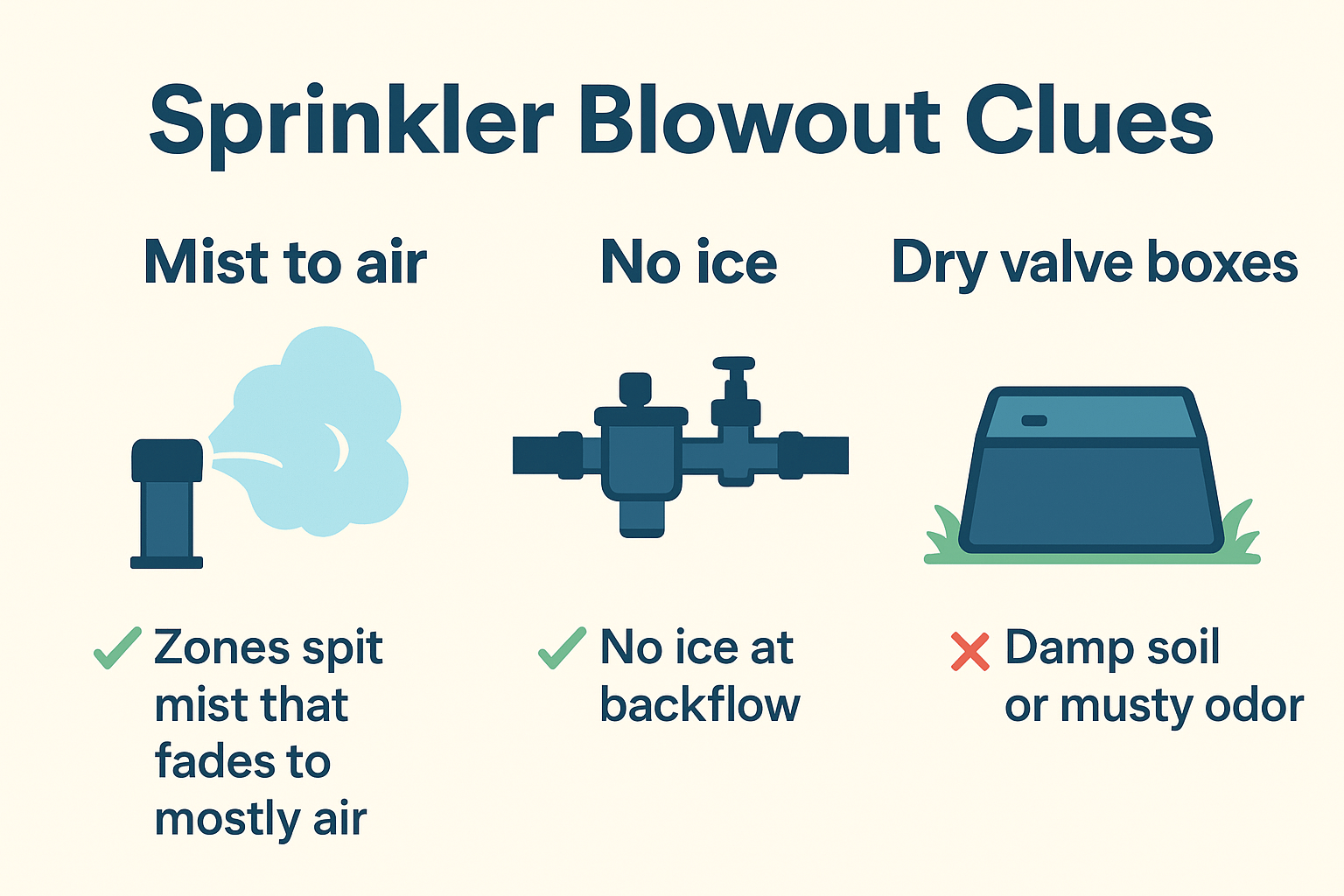
The “mist to air” moment: During blowout, zones spit a mist that fades to mostly air. If you saw persistent mist forever, some water likely remained. A homeowner once told me it “sounded like a bike pump on an empty tire”—that dry, airy whoosh is a win.
Backflow quietness: Your pressure vacuum breaker (those two brass bells) shouldn’t buzz or frost over after cold snaps. Any ice means lingering moisture or a weeping valve.
No surprise dribbles: Briefly activate a zone with the water supply still off (or use test mode). If heads cough water, lines weren’t fully cleared.
Valve boxes: Pop a lid if accessible. Dry soil and no odor = good. A musty smell or damp insulation hints at slow leaks.
Gentle reminder on pressure: Over-pressurizing with air can damage internals. If someone used high PSI and you hear odd valve chatter, consider a midwinter check.
Lawn Winterization Wins: What a Healthy Dormant Yard Looks Like
Lawn winterization isn’t dramatic; it’s quiet success that shows up later.
Final mow, just right: 2.5–3 inches going into winter reduces matting and snow mold. If you can pinch a handful of floppy blades now, it might’ve been left too high—but don’t mow in deep winter; let it be.
Late-fall feeding: A slow-release nitrogen app before the ground froze helps roots, not blades. Signs it worked? The turf held a deep, even color before dormancy and tends to pop early in spring without a growth spurt hangover.
Thatch and traffic: Low thatch plus sensible traffic means fewer winter “pancakes.” Picture a cozy blanket, not a weighted comforter. If dog paths are turning to mud after thaws, plan spring aeration.
Snow mold watch: After warm thaws, scan for gray, matted patches. Catch them early—lightly rake to lift blades and improve air flow when temps allow.
Red Flags You Can Fix Now (Before They Get Pricey)
Ice on the backflow or along a foundation line: Wrap exposed components with insulated covers, and verify the shutoff’s fully closed. If ice returns, call Turfrain—there may be a seep.
Persistent puddles at heads: A low-point drain might be clogged, or a valve is leaking by. Mark the spot for a spring diagnostic; if it worsens, we can inspect midwinter on a warmer day.
Musty turf, pink/gray fuzz: That’s likely snow mold brewing. When safe, gently fluff with a leaf rake and avoid piling snow in one spot. In spring, a targeted fungicide may be wise.
Rodent runways: Vole tracks happen. Lightly tamp tunnels after thaw and plan spring overseeding. Keeping grass a touch shorter in fall helps deter them next year.
Your Simple Winter Watchlist (No Stress, Promise)
Peek after big temperature swings: Any ice at valves or backflow? Should be none.
Glance at low spots: Puddles after a thaw can signal trouble under the surface.
Keep paths clear: Try not to store heavy snow on one patch of lawn.
Make a quick note: Snap phone photos of any recurring spots—gold for spring troubleshooting.
When Spring Arrives: Proof You Nailed It
Fast, even green-up within a couple of weeks of consistent warmth
No cracked backflow, no surprise geysers, no soggy valve boxes
Minimal bare patches; any winter blemishes fill in quickly with light overseeding
Wrapping It Up (And Warming It Up)
Winterization success is mostly invisible—quiet valves, dry lines, and a lawn that naps instead of sulks. If you spotted the “dry air” signs and your turf settled in neatly, you’re set for a smooth spring. If anything felt off, Turfrain can take a look, tweak what’s needed, and keep your system safe. Contact Us—honestly, even for a sanity check.