Can I Leave Insulation On All Season? A Lawn Owner’s No-Stress Guide
By Turfrain
Yes—with caveats. You can leave foam faucet covers and UV-rated pipe wrap on all season if they stay clean, dry, and snug. Remove bulky backflow blankets and soggy wraps in warm months to prevent corrosion, pests, and hidden leaks. Do a quick spring inspection, then keep what protects and ditch what causes moisture or damage.
What you’ll learn from this blog
The quick yes/no for leaving insulation on all season
Exactly what to inspect each spring in under five minutes
When year-round insulation makes sense—and when it doesn’t
Common problems like hidden leaks, corrosion, and pests
The best products for faucets, pipes, and backflow devices
The 80/20 Answer: Keep Simple Wraps, Ditch Bulky Blankets After Frost Risk
Here’s the simple rule most homeowners can use: leave small, tight-fitting insulation (think foam faucet covers and closed-cell pipe wrap) in place year-round if it stays dry and intact. But once your last frost has passed, remove bulky “blankets” on backflow preventers and pressure vacuum breakers. Those big covers can trap heat and moisture, inviting corrosion, mildew, or even ant nests. I’ve seen a spotless brass assembly turn green under a soggy cover by June—no thanks.
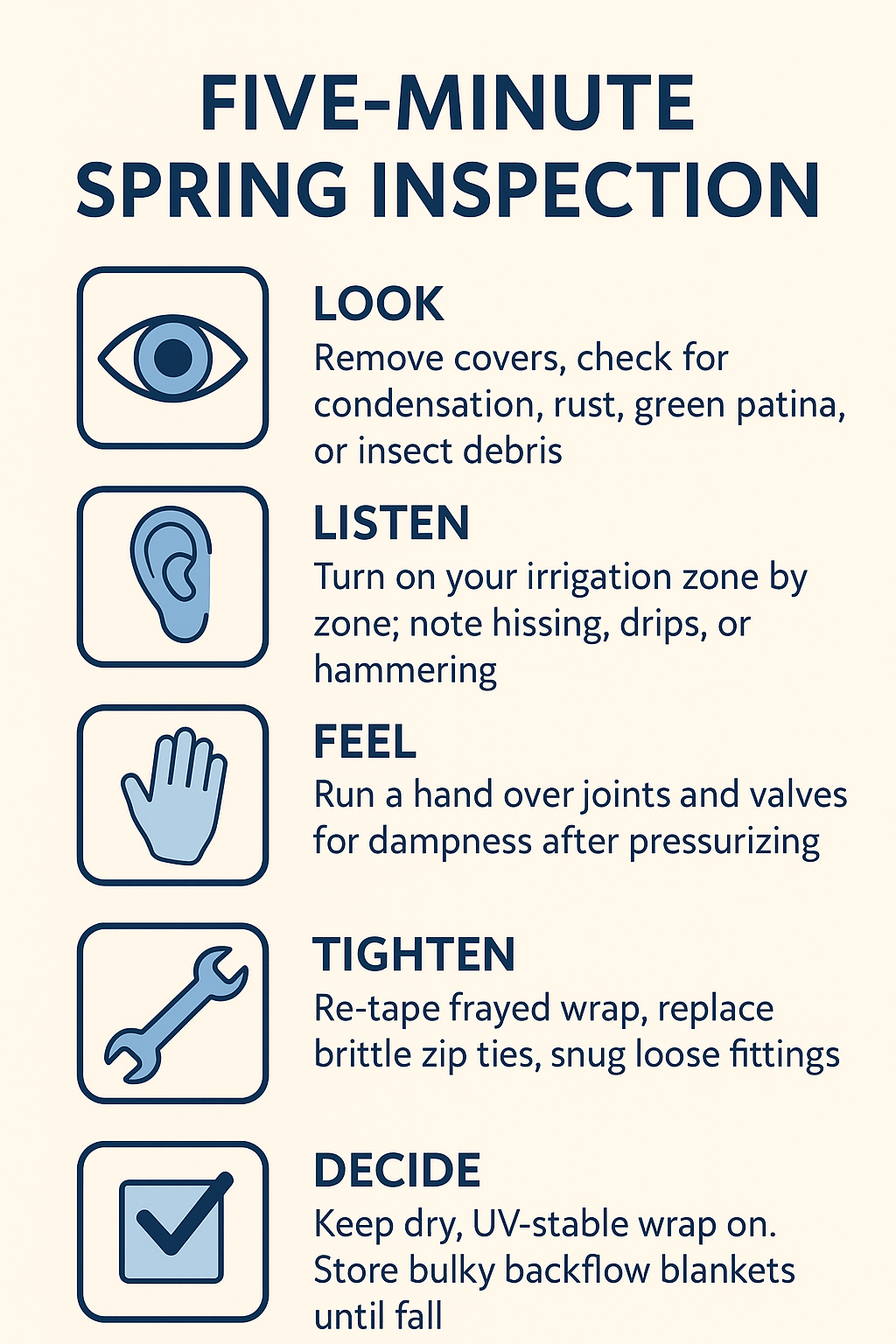
The Five-Minute Spring Check (So You’re Not Guessing)
When the overnight freeze risk is done, do this once and relax:
Look: Remove covers, check for condensation, rust, green patina, or insect debris.
Listen: Turn on your irrigation zone by zone; note hissing, drips, or hammering.
Feel: Run a hand over joints and valves for dampness after pressurizing.
Decide: Keep dry, UV-stable wrap on. Store bulky backflow blankets until fall.
When Year-Round Insulation Is Actually Smart
There are spots where leaving insulation on all season pulls its weight:
North-facing or shaded walls: Metal never really warms up; wrap reduces condensation.
Coastal or windy areas: Constant breeze pulls heat away; insulation cuts temperature swings that stress fittings.
Detached garages or crawlspaces: Less climate control = more benefit from steady temps.
High elevation or shoulder-season frosts: If you get “surprise” cold snaps in May or September, keeping covers handy (or on) makes sense.
A small anecdote: one client near a ridge line kept UV-rated pipe wrap on exposed risers year-round and skipped two spring leaks in a row that neighbors battled. Consistency wins.
When Leaving It On Backfires (And Costs You)
Insulation should protect, not hide problems. Watch for:
Moisture traps: Soggy wrap accelerates corrosion on brass and steel.
Sun rot: Non-UV foam crumbles by midsummer, turns to confetti, and clogs valves.
Pest motels: Ants, earwigs, and wasps love the dark, warm gap under a blanket.
Hidden leaks: A slow drip under insulation can erode soil and spike water bills.
Overspray soak: If sprinklers hit the cover repeatedly, it stays wet—move the head or adjust the arc.
Ask yourself: Is this cover clean, dry, and letting me inspect quickly? If not, off it goes for the warm season.
Pick the Right Gear (So You Don’t Think About It Twice)
The right materials make the “leave it or lose it” decision easy:
For faucets and short runs: Closed-cell foam sleeves with UV-rated tape. They don’t soak up water and survive summer sun.
For backflow preventers: A fitted, breathable, insulated cover with a drain grommet and removable straps. Big blanket? Use it only during freeze months.
For labels and sanity: Color-code straps (blue for winter, green for summer) so you remember what comes off and when.
For tough spots: Consider rigid covers with ventilation slots; they protect from string trimmers and allow air flow.
Quick scenario: If you’re watering all summer and the backflow assembly sits behind shrubs, skip the blanket in warm months and rely on shade plus UV-stable wrap on exposed pipes. You’ll catch leaks faster and keep critters out.
FAQs Homeowners Actually Ask
Can I leave faucet insulation on in summer? Yes, if it’s clean, dry, and UV-stable. Replace if crumbly or wet.
Do I need to remove backflow insulation in spring? Usually yes; it helps you spot leaks and prevents trapped moisture.
How do I protect outdoor pipes year-round? Use closed-cell wrap, avoid constant overspray, and do a quick seasonal inspection.
Conclusion and Call-to-Action
You don’t need to overthink it: keep small, dry, UV-safe wraps on; pull bulky blankets after frost; inspect quickly each spring. Your lawn’s irrigation will thank you with fewer leaks and a smoother start-up. If you’d like a friendly set of eyes—or a pro spring check—Contact Us at Turfrain. We’ll help you protect your system without the guesswork.