Can I Use a Towel or Blanket for Insulation? Yes—Here’s When It Actually Works
By Turfrain
Yes—you can use a towel or blanket for insulation in a pinch, especially to shield outdoor faucets, sprinkler backflow preventers, and tender lawn spots during a quick freeze. Keep the fabric dry and add a waterproof layer. It’s temporary protection only; swap to proper covers or insulation once the weather settles.
What you’ll learn from this blog
When towels and blankets help with outdoor freeze protection
How to safely wrap faucets and sprinkler parts in minutes
Better long-term insulation options for lawns and irrigation
Common mistakes to avoid during cold snaps
Quick tips for protecting new sod, shrubs, and hose bibs
When a towel or blanket actually helps your lawn and home
If a sudden cold front hits and you’re racing daylight, a towel or blanket can buy you time. Use it to:
Wrap outdoor faucets and hose bibs for overnight lows
Cover a sprinkler backflow preventer or exposed irrigation pipes
Protect new sod, fresh seed, or a prized shrub from a light frost
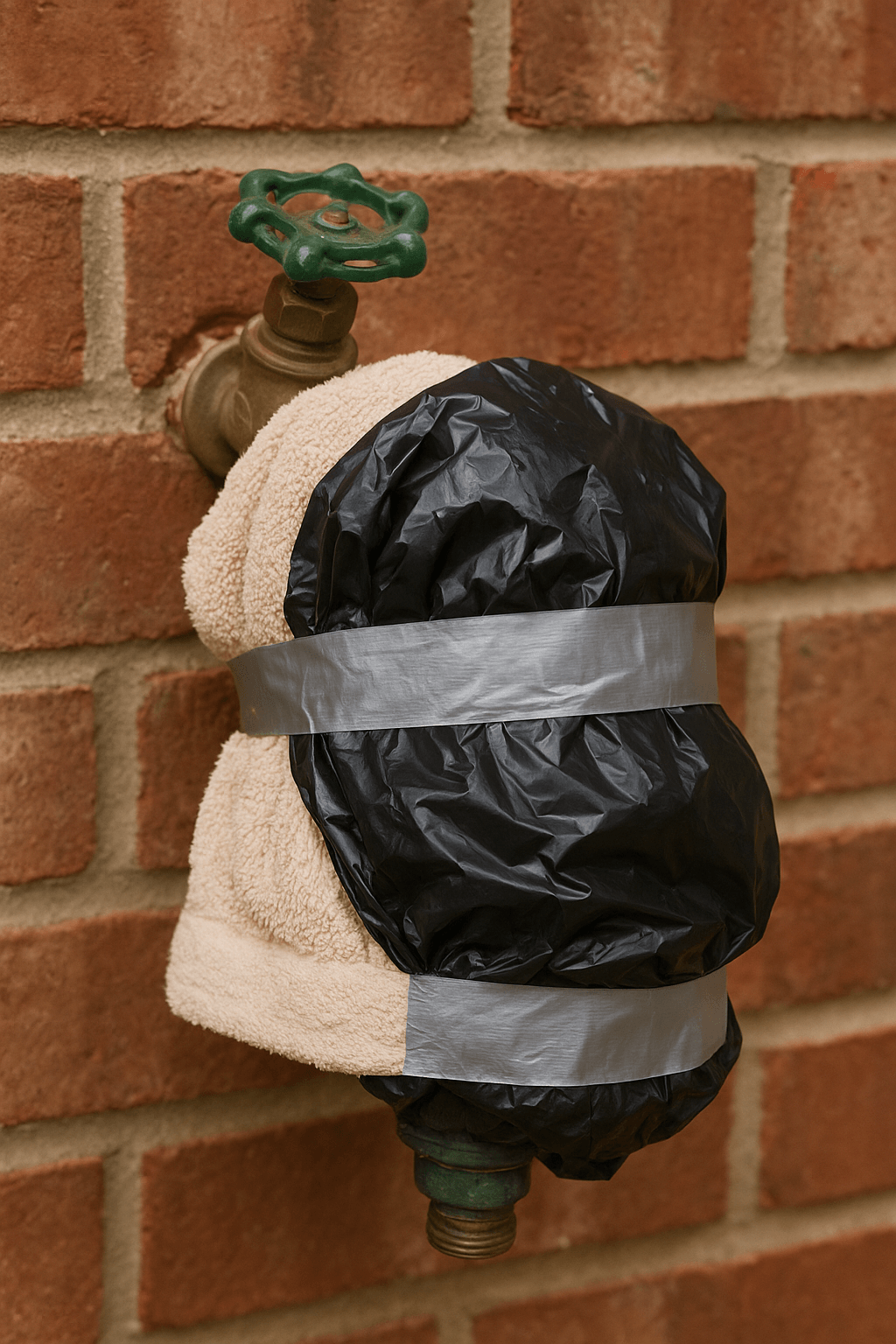
A quick story: last January, my neighbor tossed a thick beach towel around his brass backflow, slipped a contractor bag over it, and taped it snug. The unit cruised through an 18°F night without a hiccup. It’s not pretty, but in a pinch, it works.
The catch: moisture, wind, and compression can kill the warmth
Towels and blankets aren’t designed for the outdoors. Here’s what sabotages them:
Moisture: Fabric soaks up water and loses insulating power. Wet cloth + wind = ice-cold.
Wind: Drafts pull warmth away. Exposed seams act like air leaks in a winter coat.
Compression: Over-tightening squishes the air pockets that make insulation work.
Simple fixes:
Keep it dry with a plastic layer (trash bag, contractor bag, or a plastic wrap).
Block wind at seams with tape or a bungee, but don’t compress the fabric flat.
Elevate fabric off tender plants with stakes so it doesn’t freeze to the foliage.
Step-by-step: wrap it right in five minutes
For outdoor faucets or backflow preventers:
Dry first: Make sure the surface is dry.
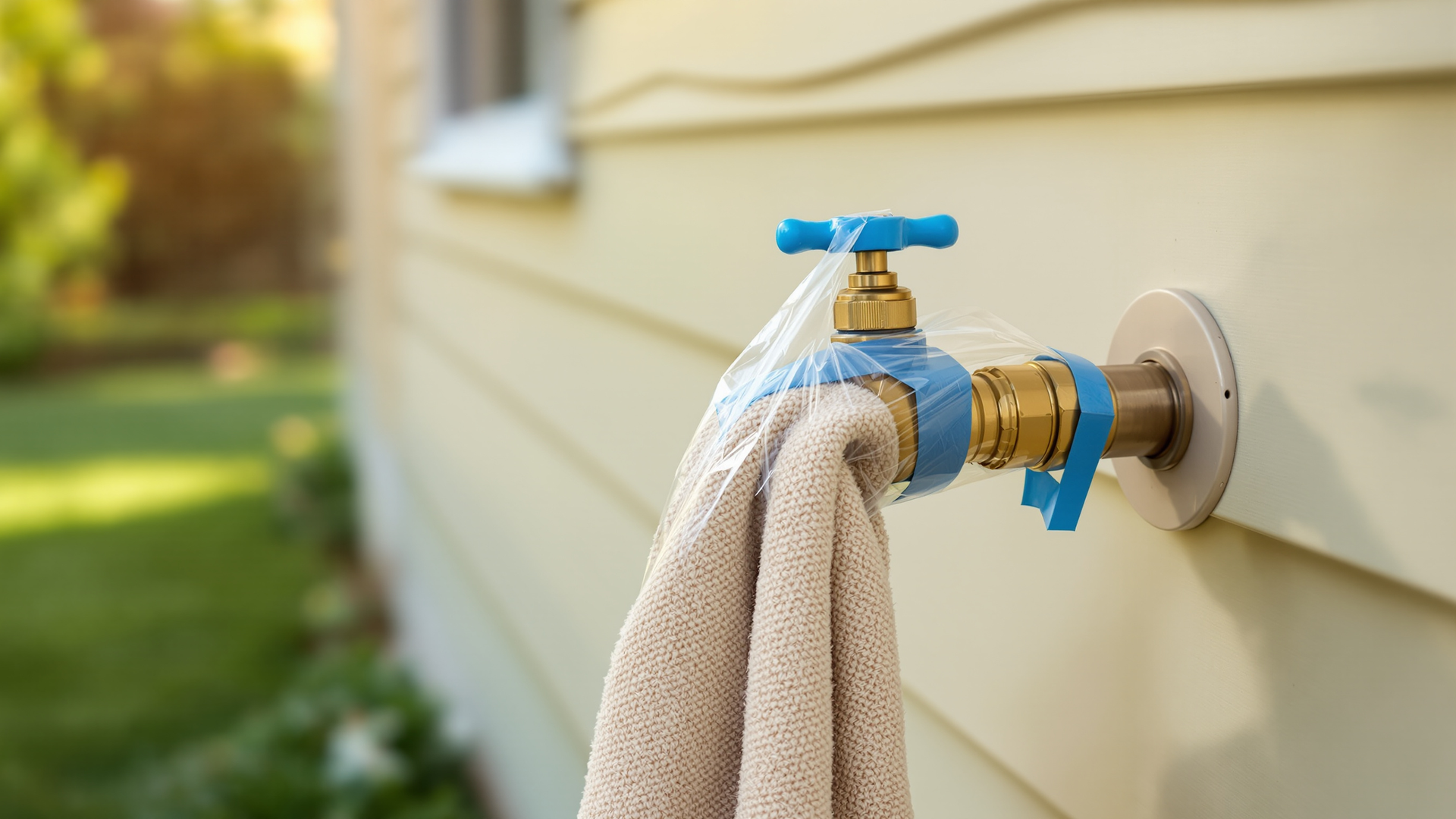
Wrap: Use a folded towel or small blanket to create a puffy layer.
Waterproof: Slide a heavy-duty plastic bag over the bundle.
Secure: Tape or bungee lightly—snug, not tight.
Check: Leave a small opening at the bottom to avoid trapping moisture, and remove on warmer days to air out.
For new sod or a tender shrub:
Stake a few garden canes, drape a light blanket or towel over them (not directly on the plant), and cover with a breathable frost cloth or plastic sheeting that doesn’t touch leaves. Remove coverings when temps rise to prevent heat and moisture buildup.
Smarter long-term upgrades homeowners love
If cold snaps are frequent in your area, replace the towel trick with gear built for the job:
Foam faucet covers: Cheap, quick, and reusable; great wind barrier.
Insulated backflow covers: Fabric shells with built-in padding; look neat and last.
Frost cloths (not plastic alone): Protect plants and lawn edges without trapping too much moisture.
Mulch: A 2–3 inch layer around shrubs and borders helps buffer shallow roots.
These upgrades are the difference between “made it through the night” and “winter? what winter?”
Avoid these easy mistakes
Using only a wet towel: Wet fabric steals heat. Always add a dry, waterproof layer.
Compressing the wrap: Tight equals cold—leave loft in the material.
Leaving covers on for days: Vent and dry when temps rise to prevent mildew and rust.
Plastic directly on plants: Plastic touching leaves in a freeze can cause damage; elevate it.
Forgetting hose removal: Disconnect hoses before wrapping faucets to prevent trapped water and cracks.
Conclusion and a friendly nudge
A towel or blanket for insulation can absolutely rescue your lawn and outdoor plumbing during a surprise freeze—just keep it dry, add a wind barrier, and treat it as temporary. When you’re ready to upgrade to proper covers or frost cloths, Turfrain can help you protect your irrigation system and landscape the easy way. Have a question or want help winterizing your yard? Contact Us—let’s keep your lawn safe, snug, and ready for spring.