How Warming Trends Affect Winterization Timing (Without Risking Your Lawn)
By Turfrain
Warmer falls push winterization later, but not by much; go by soil temperatures and the first hard freeze, not the calendar. Apply winterizer when soil hovers around 45–50°F, mow once more, and blow out sprinklers before multiple nights below 28°F. Warmer spells stretch the window—but sudden cold snaps still decide the deadline.
What you’ll learn from this blog
The two numbers that actually set your winterization date
How to time sprinkler blowouts in a warm fall
When to fertilize (and when to skip it) for different grass types
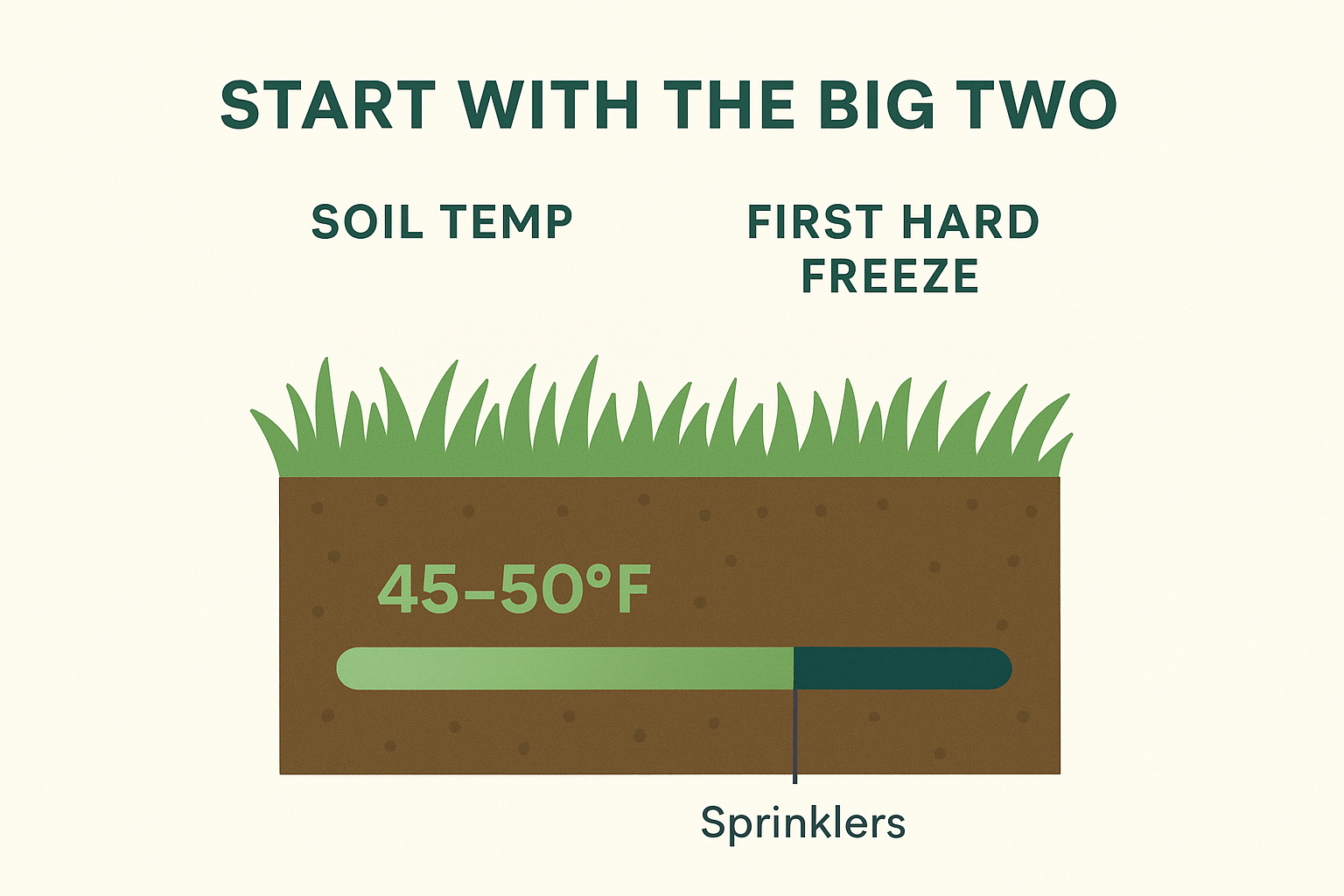
Start With the Big Two: Soil Temps and the First Hard Freeze
Here’s the cheat code: your lawn’s “clock” lives underground. Think of soil temperature as a slow, steady thermostat. When it lingers around 45–50°F, cool-season grasses are still active enough to use a late-fall “winterizer” feeding. Meanwhile, the first hard freeze (several nights below 28°F) closes the irrigation window, whether the daytime feels springy or not.
Quick guide you can screenshot:
Winterizer for cool-season lawns (bluegrass, fescue, rye): Apply when top growth slows and soil sits near 45–50°F.
Warm-season lawns (Bermuda, zoysia, St. Augustine): Skip late nitrogen; if anything, use a low- or zero-N, potassium-forward product only if a soil test suggests it.
Irrigation: Plan blowouts before the first stretch of sub-28°F nights in the 7–10 day forecast.
Sprinklers in a Warm Fall: Don’t Wait for Ice Beards
A neighbor once bragged he could “squeeze out a few more green weeks.” Then a hard snap turned his backflow into an ice sculpture—and a repair bill. Even during warming trends, water in exposed pipes, backflows, and shallow lines can freeze fast.
What to do when the forecast stays weirdly mild:
Keep watering lightly until soil temp drops near 40–45°F, especially if it’s dry. Your roots still appreciate moisture.
Book the blowout before consecutive nights below 28°F appear in the forecast. Once that window shows up, you’re out of do-overs.
Can’t schedule a pro in time? At minimum, shut off the supply, open drain valves, and insulate the backflow. It’s a stopgap, not a substitute.
Feeding and Mowing: A Late-Fall Tune-Up Without Overdoing It
Warm autumns tempt us to keep mowing and feeding. But the goal is to help the lawn store energy, not push leafy growth that frost can nip.
A simple, no-drama approach:
Winterizer timing: For cool-season lawns, one last feeding at soil 45–50°F helps build roots and carbohydrate reserves. Choose a product with moderate nitrogen and solid potassium; slow-release is your friend.
Warm-season caution: Late nitrogen can stimulate tender growth right before a surprise cold shot. That’s like wearing a T-shirt to a snowball fight—skip it.
Final mow: Drop one notch (not scalping) for the final cut to reduce matting and snow mold risk. Bag heavy leaves; mulch thin layers.
Last deep soak: If it’s been dry, give the lawn a deep watering a day or two before the blowout. Moist soil holds heat a bit better than bone-dry soil.
A Warm-Fall Winterization Game Plan (Step-by-Step)
Watch soil temperature: Aim for 45–50°F for cool-season winterizer; below that, you’re likely past the uptake window.
Check the 10-day forecast: Circle the first cluster of sub-28°F nights—that’s your sprinkler deadline.
Schedule the blowout: Book earlier than you think; warm trends cause a rush.
Do the final mow and leaf cleanup: Keep the canopy clean to prevent disease.
Finish with edges and gear: Disconnect hoses, insulate spigots, and set your controller to “off” or “rain-mode.”
When Should I Winterize During a Warm Fall? A Regional Sanity Check
Upper Midwest/Northeast: Warming trends may buy you 1–2 extra weeks. The moment the forecast flags three nights under 28°F, it’s go time for sprinklers.
Pacific Northwest/Maritime climates: Less severe freezes mean more flexibility. Still blow out or drain exposed components before your first real cold shot.
Southern transition zones: Cool-season lawns can take a late feeding; warm-season lawns should avoid late nitrogen.
High plains/intermountain areas: Big swings are normal. Don’t let a 65°F afternoon trick you—watch the night lows like a hawk.
In short: warming trends shift winterization timing a little later, but the first hard freeze still owns the final say. Keep one eye on soil temps and the other on the 10-day forecast, and you’ll thread the needle without drama.
Conclusion and a Friendly Nudge
A warmer fall is a gift, not a guarantee. Let soil temps guide your fertilizer timing, and let the first hard freeze set your sprinkler deadline. If you’d rather not play weather roulette, Turfrain can handle the timing, the blowout, and the late-fall tune-up so you don’t miss a beat. Have a question or want a quick quote? Contact Us—we’re here to help your lawn coast into winter calmly.